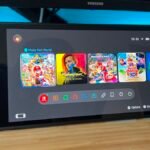



The “Human Eye” Myth
It is the most common argument in gaming forums: “The human eye can only see 60 frames per second, so buying a 360Hz monitor is a waste of money.”
In 2026, with 540Hz OLED panels becoming affordable and esports pushing the limits of human reaction time, we need to settle this debate once and for all.
The short answer is: Yes, you can see it. The long answer is: It depends on how you play.
In this deep dive, we are going to break down the science of Refresh Rates, Motion Clarity, and the law of “Diminishing Returns” to help you decide if upgrading your monitor will actually make you a better gamer or just leave you with an empty wallet.
The Science: Hertz vs. FPS
First, let’s clear up the terminology.
- FPS (Frames Per Second): How many images your Graphics Card (GPU) produces every second.
- Hz (Refresh Rate): How many times your Monitor updates the screen every second.
If you have 300 FPS in Highguard but a 60Hz monitor, you are only seeing 60 images. The extra 240 frames are wasted (mostly). However, “seeing” isn’t just about fluidity; it’s about Motion Clarity and Input Lag.
The Jump: 60Hz to 144Hz (The “Wow” Factor)
If you are still playing on a 60Hz TV or office monitor, you are playing a different game. Going from 60Hz to 144Hz is the single biggest upgrade in PC gaming history.
Más en RoyaleFun
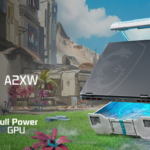
- Frame Time: At 60Hz, a new frame appears every 16.6ms.
- Frame Time: At 144Hz, a new frame appears every 6.9ms.
The Result: The game feels twice as responsive. Tracking a moving target becomes instinctive rather than a guessing game. It is visually obvious to anyone, even non-gamers. If you are a gamer in 2026, 144Hz is the bare minimum.
The Diminishing Returns: 144Hz to 240Hz
Here is where it gets tricky. Going from 60 to 144 reduces frame time by ~10ms. Going from 144 to 240 reduces frame time by only ~2.7ms.
Can you feel 2.7ms?
- Visually: It is much harder to notice. The jump isn’t “night and day” like before.
- Competitively: Yes. In fast-paced shooters like Valorant or Highguard, that tiny reduction in motion blur makes enemies look sharper when they are strafing.
Verdict: If you are a casual gamer, stay at 144Hz/165Hz. If you play Ranked, 240Hz gives you a slight edge.
The Frontier: 360Hz, 480Hz & 540Hz
In 2026, we have monitors hitting 540Hz. Is this ridiculous? Not entirely. At this speed, the monitor is updating so fast that it mimics the motion blur of real life (CRT-like clarity).
However, there is a catch: Your PC. To benefit from a 540Hz monitor, you need to maintain a stable 540 FPS in-game. Even with an RTX 5090, maintaining that framerate in modern AAA games is nearly impossible. This tech is strictly for competitive titles like Counter-Strike or League of Legends running on low settings.
The Secret Factor: OLED vs. IPS
Refresh rate isn’t the only king anymore. In 2026, Pixel Response Time matters more.
A 240Hz OLED monitor will often look clearer than a 360Hz IPS LCD.
- Why? OLED pixels change color instantly (0.03ms). LCD pixels take time to transition (1ms+), causing “Ghosting” (a trail behind moving objects).
If you have to choose between a faster Hertz or an OLED panel, choose OLED. The instant pixel response makes 240Hz feel like 480Hz.
Conclusion: What Should You Buy?
Stop looking at just the number on the box. Buy for your use case.
- The Story Gamer:
- Target: 4K / 120Hz – 144Hz.
- Priority: Resolution and Colors (OLED). You don’t need 240Hz for Red Dead Redemption 2.
- The Ranked Grinder:
- Target: 1440p / 240Hz – 360Hz.
- Priority: The “Sweet Spot.” Best balance of visibility and speed.
- The Aspiring Pro:
- Target: 1080p / 500Hz+.
- Priority: Speed above all else. Graphics don’t matter.
Final Thought: The human eye can see the difference, but your wallet might not appreciate the cost. For 99% of players in 2026, a high-quality 240Hz OLED is the endgame.