

The Slow Burn in a TikTok Era
We are living in the age of dopamine. Games like Highguard demand our attention in millisecond intervals. Battle Royales shrink our attention spans. We scroll through 15-second clips, demanding instant gratification. The gaming industry has pivoted to “Engagement Based Matchmaking,” loot boxes, and colorful skins that scream for your wallet.
- The Slow Burn in a TikTok Era
- Part I: The Technology of 1899 (Graphics & Physics)
- Part II: The Ecosystem (A World That Doesn’t Need You)
- Part III: The Narrative (The Tragedy of Arthur Morgan)
- Part IV: The “Boring” Gameplay (Design by Friction)
- Part V: The Music (The Sound of the West)
- Part VI: The Epilogue & The Bridge to RDR1
- The Last of Its Kind?
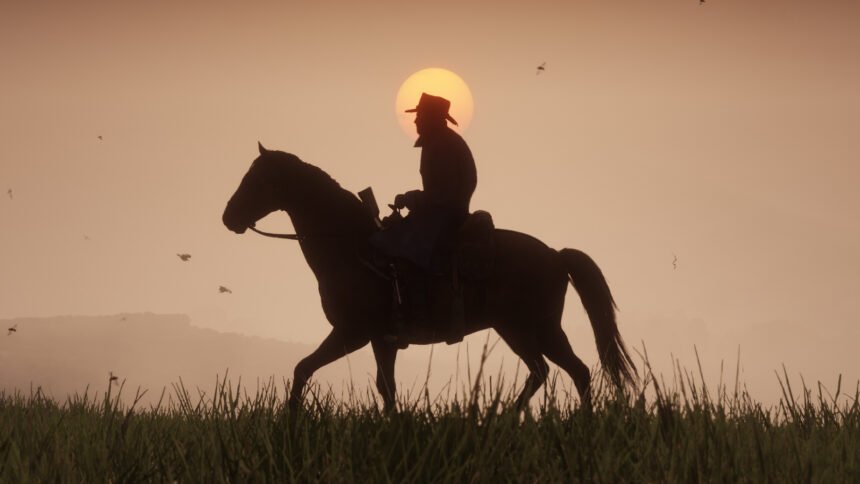
And then, there is Red Dead Redemption 2.
Returning to Rockstar Games’ 2018 magnum opus nearly eight years later feels like stepping out of a noisy nightclub into a quiet, snow-covered forest. It is jarring. It is slow. It is deliberate. And even now, with the PlayStation 5 Pro and the imminent arrival of GTA VI, playing Red Dead Redemption 2 leads to a terrifying conclusion for other developers:
Nobody has caught up yet.
In this massive retrospective review, we are going to dissect why Arthur Morgan’s tragic journey remains the unparalleled peak of the medium. We will analyze the tech that embarrasses Unreal Engine 5, the narrative that rivals literature, and the bold game design choices that no other studio has dared to copy.
This isn’t just a game review. This is an eulogy for the Wild West, and a love letter to the most “alive” world ever simulated.
Part I: The Technology of 1899 (Graphics & Physics)
The RAGE Engine vs. The World
In 2026, we are surrounded by games built on Unreal Engine 5.4. We have Nanite and Lumen. We have path-tracing in Cyberpunk 2077. Technically, on paper, modern games have better lighting and higher resolution textures.
Más en RoyaleFun

So why does RDR2 still look better than 99% of games released this year?
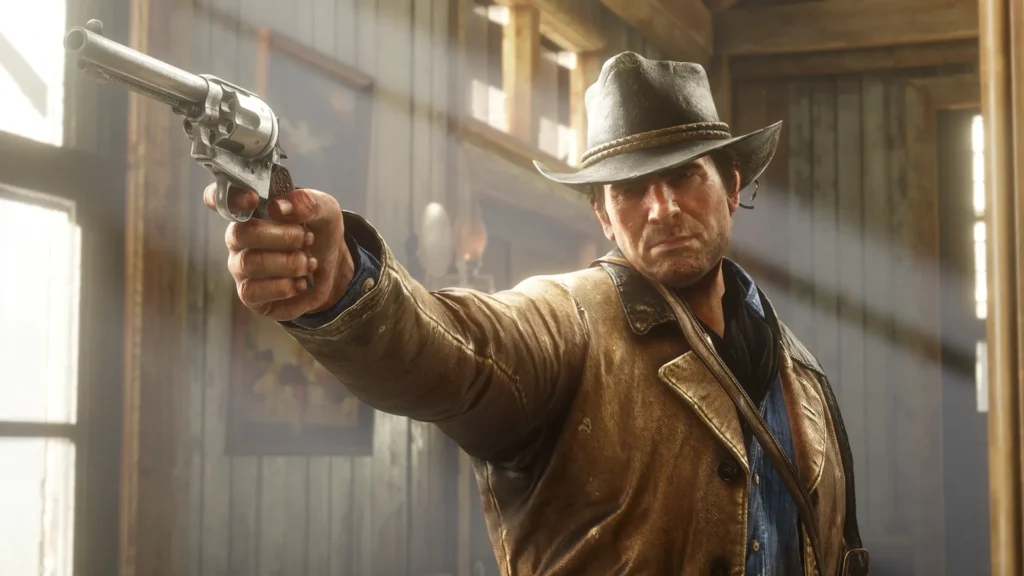
The answer lies in art direction and physics integration. Rockstar’s proprietary RAGE engine (Rockstar Advanced Game Engine) does something that modern engines struggle with: Physicality. When Arthur walks through deep mud in Valentine, he doesn’t just clip through a texture. The mud deforms. His boots get dirty. His gait changes as he struggles for traction. This isn’t a visual trick; it is a physical simulation connecting the character to the world.
The “Euphoria” Factor
We cannot talk about this game without discussing the Euphoria physics engine. In 2026 shooters, enemies play a “death animation” when shot. They ragdoll predictably. In RDR2, every bullet impact is calculated. Shoot an O’Driscoll in the leg? He stumbles, grabs the wound, and tries to limp to cover. Shoot him in the shoulder? The force spins him around. This dynamic reaction creates gunfights that feel visceral and disturbing. You aren’t shooting hitboxes; you are shooting digital human beings. Eight years later, no other studio—not Ubisoft, not CD Projekt Red—has licensed or replicated this level of procedural animation. It remains the gold standard.
The Lighting of Lemoyne
Ride through the swamps of Lemoyne at 4:00 AM. The way the moonlight filters through the moss hanging from the trees, creating volumetric fog that sits heavily on the water, is a masterclass. The weather system isn’t just a screen filter; it’s a presence. Storms roll in dynamically, clouds form organically, and the wind actually affects the trees and the coat of your horse. Even without hardware Ray Tracing, RDR2’s pre-calculated global illumination is so artistically tuned that it often looks more realistic than the “technically superior” fully ray-traced games of today.
Part II: The Ecosystem (A World That Doesn’t Need You)
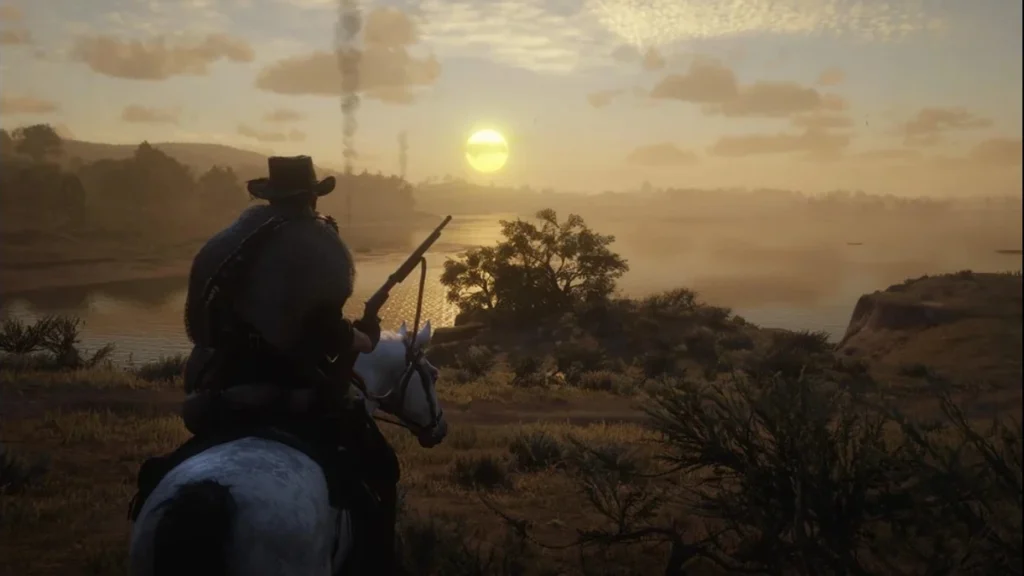
Most open worlds are theme parks. They are built for the player. Nothing happens unless YOU are there to see it. Red Dead Redemption 2 is different. It is an ecosystem that simulates life regardless of your presence.
The 200 Species Simulation
If you stand still in the Heartlands and just watch through your binoculars, you will see a nature documentary.
- An eagle swoops down to snatch a snake from the grass.
- A pack of wolves coordinates to ambush a deer.
- A bear scratches its back against a tree.
- Possums play dead when threatened.
Rockstar coded behaviors for over 200 species of animals. This level of obsessive detail serves no “gameplay” purpose. You don’t get XP for watching a dog beg for food in town. But it creates Immersion. It sells the illusion that this world is ancient and indifferent to you. You are just a visitor in it.
The NPC AI: Interactions, Not Quests
The “Greet / Antagonize” system revolutionized how we interact with NPCs, and shockingly, it hasn’t been copied. In Skyrim or Starfield, an NPC is a quest dispenser. In RDR2, Arthur can defuse a situation, escalate it to a fistfight, or simply say hello. Try following an NPC in Saint Denis. They have a schedule. They go to work, they take lunch breaks, they go to the saloon, they go home to sleep. They react to your hygiene (if you are covered in mud/blood, they won’t serve you). They remember if you caused a bar fight three days ago. This social memory creates a living, breathing community that makes modern “AI-driven” NPCs look robotic.
Part III: The Narrative (The Tragedy of Arthur Morgan)
The Anti-Hero We Didn’t Know We Needed
When RDR2 was announced, nobody wanted to play as Arthur Morgan. We all wanted John Marston. Arthur looked like a generic brute. By the end of Chapter 6, most players would agree: Arthur Morgan is the most complex, well-written character in gaming history.
The genius of the writing is in the redemption arc. Unlike most games where you become stronger and more powerful, RDR2 is a story of decline. The gang is falling apart. The era of the outlaw is ending. Civilization is closing in. And Arthur is dying.
The Disease as a Narrative Device
(Spoilers ahead, obviously). Giving the protagonist Tuberculosis (TB) midway through the game was a risky, brilliant move. It forces the player to slow down. You can’t eat as much. Your stamina drains faster. You look sick. It aligns the gameplay mechanics with the narrative theme: Mortality. As Arthur faces his end, the player’s priorities shift. You stop caring about looting every corpse for $2. You start caring about helping people. You start trying to be the man you wish you had been. The “High Honor” ending on the mountain isn’t just a cutscene; it is earned through 60 hours of gameplay choices.
Dutch van der Linde: The Villain
Dutch is one of the greatest antagonists because he doesn’t think he is one. His descent from a charismatic leader to a paranoid, delusional killer is subtle. It happens over hundreds of campfire conversations. The cracking of his voice, the desperate plans (“Tahiti!”), the betrayal of his own code. It is Shakespearean tragedy wrapped in a cowboy hat.
Part IV: The “Boring” Gameplay (Design by Friction)
This is the most controversial part of the review. Many critics in 2018 called the game “boring,” “clunky,” or “tedious.” In 2026, we can see it for what it truly is: Design by Friction.
The Weight of Animation
- You have to manually pick up a can of beans.
- You have to physically clean your gun to keep it working.
- You have to brew coffee by the fire.
- You have to skin the animal, animation and all.
Modern game design tries to streamline everything (“Press F to loot area”). Rockstar deliberately added friction. Why? Because friction grounds you in the world. By forcing you to perform the action, the game forces you to inhabit the character. It builds a bond between player and avatar. When Arthur is tired, you feel the weight of the controller. When the horse is dirty, you feel the obligation to brush it. This isn’t “bad design”; it is uncompromising immersion. It asks for your patience, and it rewards you with a sense of presence that “fast” games can never achieve.
The Camp System
The camp isn’t just a hub; it’s a character. It moves. It changes mood. If the gang is starving, people are grumpy. If you just robbed a bank, there is a party. You can sit by the fire and just listen to stories for hours. This “downtime” is essential to the pacing. It reminds you what you are fighting for: a family.
Part V: The Music (The Sound of the West)
Woody Jackson’s score deserves its own museum. The dynamic layering of the music is subtle genius.
- When you are galloping, the drums kick in (The “Gallop Layer”).
- When you are in a shootout, the bass intensifies.
- When you are threatened, the screeching violins create tension.
And then there are the vocal tracks. D’Angelo’s “Unshaken” playing during the ride back to Shady Belle. “That’s The Way It Is” during the final ride. These moments are etched into the memory of every gamer. They use music not just as background noise, but as an emotional sledgehammer.
Part VI: The Epilogue & The Bridge to RDR1
Most games end after the climax. RDR2 keeps going for another 8 hours. The Epilogue, where you play as John Marston building a house (yes, the House Building Song), is often criticized as too long. But in 2026, we understand its purpose. It deconstructs the myth. It shows the mundane life that Arthur sacrificed himself for. It bridges the gap to the original Red Dead Redemption perfectly, making the tragedy of the first game hit even harder. Playing RDR1 after finishing RDR2 changes the context of every line John speaks. It turns the duology into one massive, cohesive epic.
The Last of Its Kind?
As we look toward the release of Grand Theft Auto VI later this year, Red Dead Redemption 2 stands as a monument. It was created under “crunch” conditions that the industry is (rightfully) trying to move away from. It had a budget and a development time (8 years) that is becoming unsustainable. There is a real fear that we may never see a game like this again. A game so obsessed with detail that it simulates the shrinking of horse testicles in the cold. A game that values silence as much as gunfire.
Is it worth playing in 2026? Absolutely. In fact, it is mandatory. If you are tired of battle passes, unfinished “Early Access” titles, and soulless open worlds filled with question marks, come back to 1899. Come back to Arthur Morgan.
It remains, quite simply, the greatest video game ever made.
Score: 10/10 – Masterpiece