


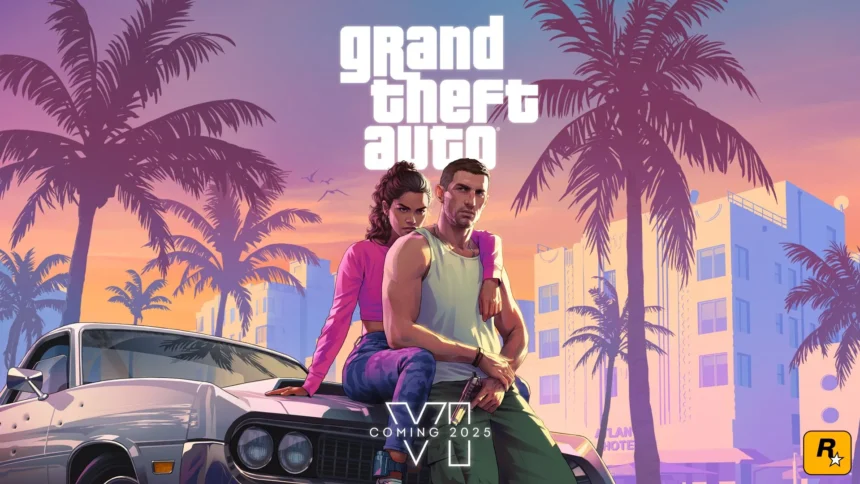
Here we go again. If you felt a disturbance in the Force this morning, it was millions of gamers simultaneously groaning as Rockstar Games dropped the bomb: Grand Theft Auto VI is officially delayed to November 19, 2026.
We knew it was coming. Deep down, in that cynical part of our brains formed by Cyberpunk 2077 and Starfield, we knew “Early 2026” was a lie. But seeing the official press release still stings.
The Silence That Speaks Volumes
It happened again. It’s January 24, 2026, and instead of gearing up for a Spring release, the gaming community woke up to the dreaded “Yellow Screen of Death”—or in this case, a press release that felt just as heavy. Grand Theft Auto VI has been officially pushed to November 19, 2026.
For the casual observer, it’s just another delay. But for those of us who have been tracking Rockstar Games’ development cycles since the PS2 era, this isn’t just a scheduling conflict. It’s a symptom of a much larger shift in the industry. The dream of a “Early 2026” launch was arguably dead on arrival, but why does Rockstar keep doing this? And more importantly, is November actually a safe bet, or is 2027 lurking in the shadows?
In this analysis, we are going to look past the PR fluff. We’ll analyze the history of Rockstar’s delays, the technical challenges of the new RAGE engine, and the “Crunch Culture” rumors that might be saving the developers’ sanity but testing our patience.
Part 1: The “Rockstar Pattern” – A History of Delays
Let’s be honest: when was the last time Rockstar hit their original release date? To understand the GTA VI situation, we have to look at the data. History doesn’t repeat itself, but it certainly rhymes.
- Grand Theft Auto V: Originally slated for Spring 2013, it was delayed to September 17, 2013. That four-month push allowed them to polish the game on PS3/Xbox 360, but it drove fans crazy.
- Red Dead Redemption 2: This is the scary one. Announced for Fall 2017. Delayed to Spring 2018. Delayed again to October 2018.
See the pattern? Rockstar uses “Spring” release windows as placeholders. The real target has almost always been the Holiday window (Q4). Why? Because releasing in November maximizes sales for Black Friday and Christmas. From a business standpoint, pushing GTA VI to November 19 isn’t a failure; it’s a strategic maneuver to dominate the 2026 holiday sales charts entirely.

But knowing this doesn’t make the wait any easier. We are talking about a franchise that hasn’t seen a new entry in over 12 years. An entire generation of gamers has grown up without experiencing a “new GTA launch.”
Part 2: The Technical Hurdle – Why “Polishing” Takes Forever
The official reason given is “polishing.” But what does that actually mean in 2026? We aren’t just talking about fixing bugs where cars fly into space.
The Scale of Vice City Leaks suggest that the new Vice City is not just a map; it’s a living ecosystem. We are talking about thousands of NPCs with individual routines, dynamic weather systems that affect driving physics, and an interior density we’ve never seen before. Getting this to run on the base PlayStation 5 and Xbox Series S is likely a nightmare.
The Series S Problem There is a growing theory among tech analysts that the Xbox Series S might be the bottleneck. Microsoft requires feature parity between Series X and S. If Rockstar is struggling to get GTA VI running at a stable 30fps on the weaker console, they can’t release the game. They need these extra months to optimize the RAGE engine to its absolute limit.
If you are angry about the delay, don’t blame the developers. Blame the ambition of trying to simulate a realistic Florida on hardware that is technically six years old at this point.
Part 3: The “Crunch” Factor and Human Cost
In 2018, leading up to Red Dead Redemption 2, reports surfaced of 100-hour work weeks at Rockstar. It was a PR disaster. Since then, the company has vowed to clean up its culture.
This delay might be the proof that they are keeping that promise. If sticking to a Spring 2026 release meant burning out their staff and forcing mandatory crunch, then a delay to November is the ethical choice. As much as we want the game now, nobody wants it built on the backs of exhausted developers. A healthy team makes a better game. If waiting until November means the developers get to see their families and we get a bug-free experience, that is a trade-off we should be willing to accept.
Part 4: Economic Shockwaves – Take-Two’s Stock
We can’t ignore the money. Take-Two Interactive (Rockstar’s parent company) likely took a massive hit on the stock market this morning. Investors were banking on a Q1 or Q2 revenue boost. Pushing this to Q4 changes their entire fiscal year outlook.
This puts immense pressure on the team. The game cannot just be “good” in November. It has to be flawless. It has to be the highest-grossing entertainment product of all time within 24 hours to make up for the lost time. The stakes have never been higher.
The Long Road to November
So, here we are. Ten more months of waiting. Ten more months of analyzing 3-second leaked clips on Twitter. Ten more months of replaying GTA V for the 50th time.
Is it disappointing? Absolutely. The hype train has been derailed, and the momentum has stalled. But if history has taught us anything, it’s that Rockstar is the one developer that earns the right to delay. Red Dead Redemption 2 was worth every second of the extra wait.
November 19, 2026, is now the most important date in gaming history. Until then, we wait. We speculate. And we hope that this is the final delay.
Because if they push it to 2027… the internet might actually burn down.